
News & Highlights
Latest Publications and Research Developments in Materials Science & Computational Chemistry
02/26
ASCICat: A Python Framework for Multi-Objective Electrocatalyst Screening
Open-Source Software Release + Preprint
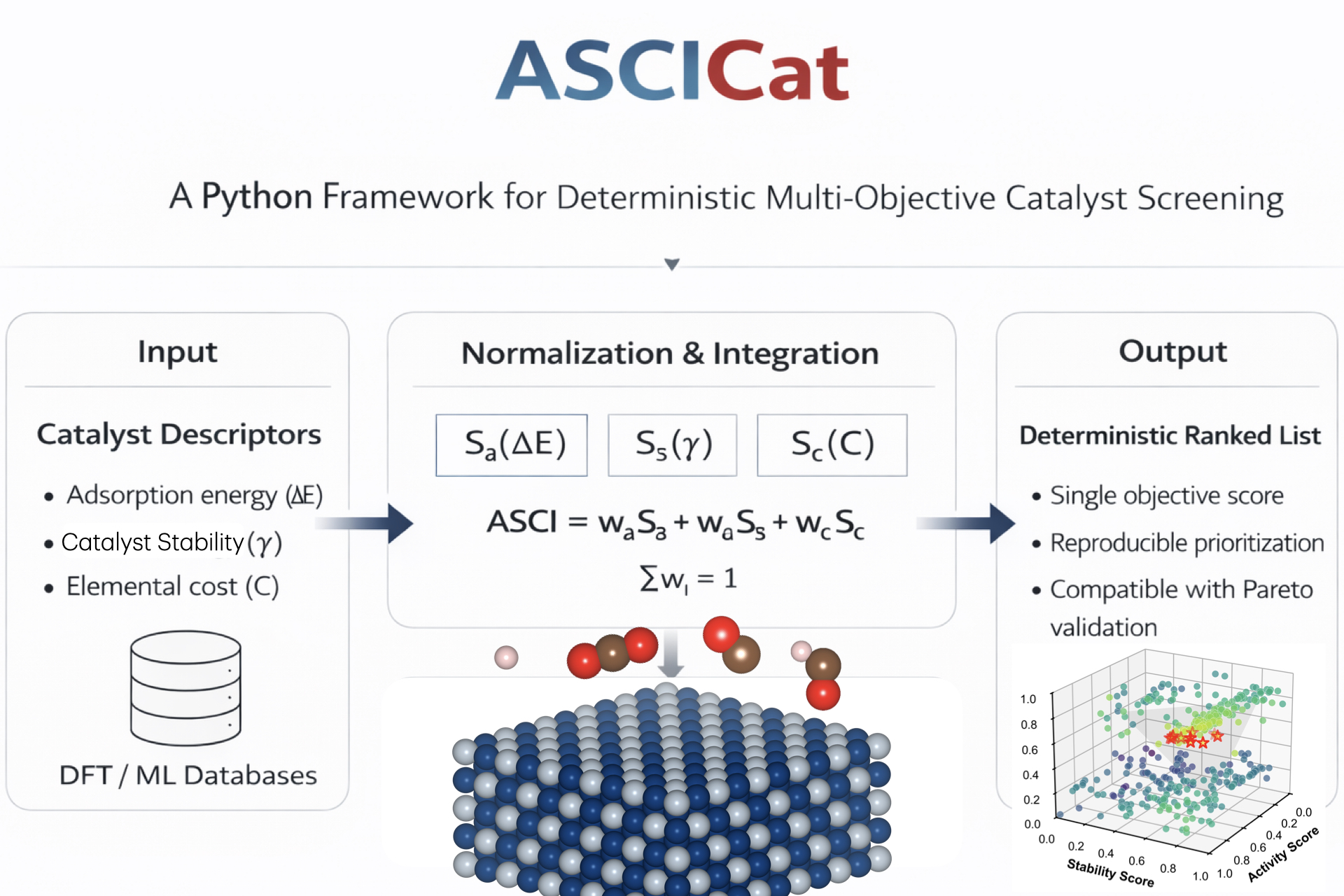
ASCICat integrates activity, stability, and cost descriptors into a unified score for deterministic, reproducible catalyst ranking
We are excited to release ASCICat, an open-source Python framework that transforms how we prioritize electrocatalyst candidates. Traditional volcano plots optimize for activity alone, while Pareto methods identify multiple "equally optimal" solutions without clear prioritization. ASCICat bridges this gap by combining catalytic activity (from Sabatier-optimal binding energies), electrochemical stability (via surface energies), and material cost into a single Activity-Stability-Cost Index (ASCI). Validated on 361 bimetallic HER catalysts and three CO₂RR pathways (CO, CHO, COCOH), ASCICat identifies earth-abundant candidates like Fe₂Sb₄ (ASCI = 0.899) and Cu₃Sb while providing built-in sensitivity analysis to quantify ranking robustness across 171 weight configurations. The package includes a Python API, command-line interface, and graphical user interface for accessible multi-objective catalyst screening.
📦 Open-Source Python Package
⚡ HER + 3× CO₂RR Pathways
📊 171-Point Sensitivity Analysis
🖥️ API + CLI + GUI
08/25
Machine Learning–Accelerated Discovery of Earth-Abundant Bimetallic Electrocatalysts for the Hydrogen Evolution Reaction
Preprint, ChemRxiv
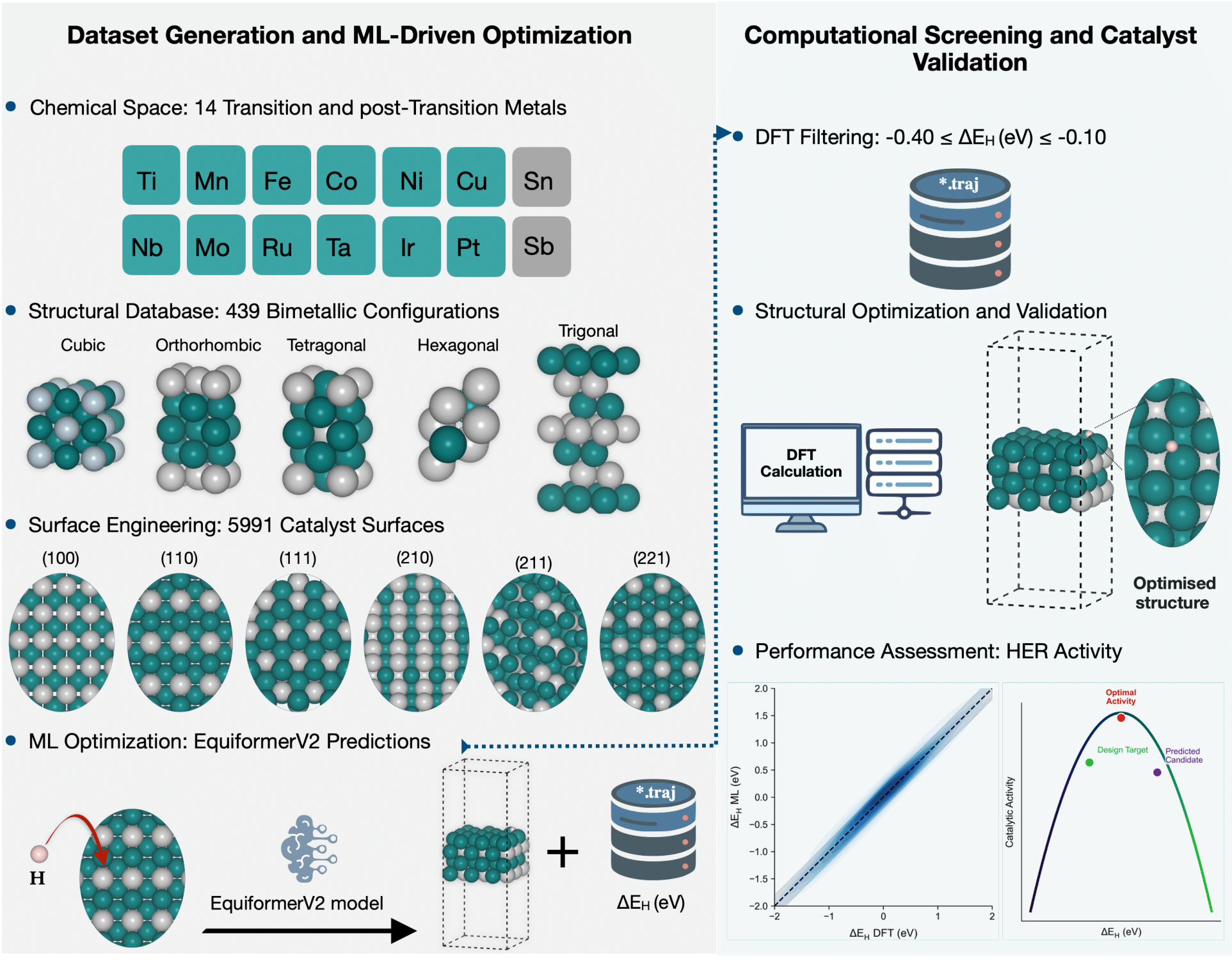
EquiformerV2 enables fast and accurate screening of HER activity across 439 bimetallic surfaces and 560,000+ adsorption sites
We just released a new preprint where we combine symmetry-equivariant machine learning with DFT to rethink how we search for electrocatalysts. The EquiformerV2 model allowed us to scan more than 560,000 hydrogen adsorption sites across 439 bimetallic surfaces — an intractable space for pure DFT. Rather than focusing solely on activity, we also incorporated surface stability and material cost into the screening, allowing us to prioritize candidates that are not only efficient but also durable and scalable. This led to a shortlist of low-cost, scalable HER catalysts like Fe₂Sb₄, Cu₆Sb₂, and Cu₆Sn₂. Our automated pipeline bridges AI predictions with DFT validation, offering an adaptable framework for other electrocatalytic systems.
🧠 560K+ ML Predictions
🔬 439 Bimetallic Surfaces
⚡ Top Candidates: Fe₂Sb₄, Cu₆Sb₂, Cu₆Sn₂
📈 MAE vs DFT: 0.038 eV
07/25
Planar [Cu–S]–Organic Framework for Selective and Low-Overpotential CO₂ Reduction to Formate
Small Structures, Wiley
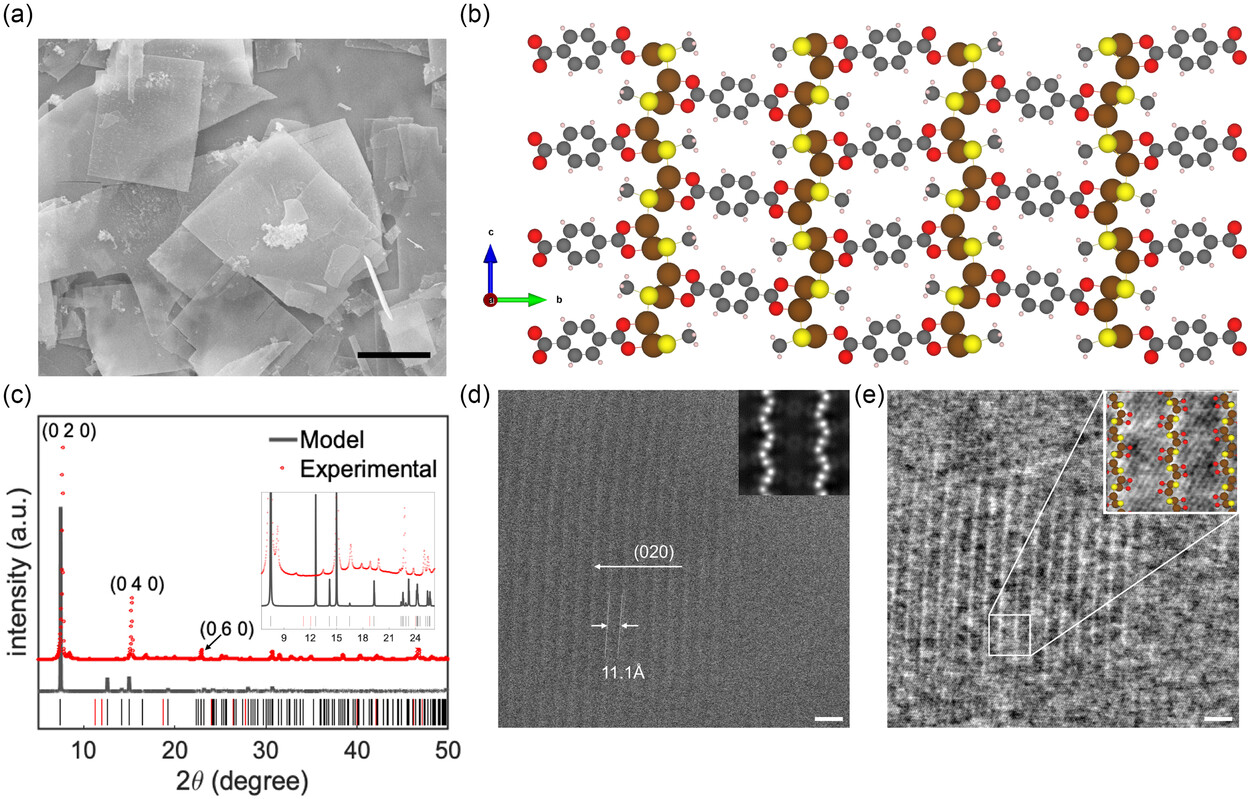
Structural analysis of Cu–S–BDC MOF showing quasi-2D inorganic building units and electrochemical performance for CO₂ reduction
The development of advanced catalysts with innovative nanoarchitectures is critical for addressing energy and environmental challenges such as the electrochemical CO₂ reduction reaction (CO₂ RR). We present an innovative copper–sulfur planar structure, Cu–S–BDC, within a metal–organic framework (MOF) catalyst, which demonstrates 100% selectivity toward formate as the sole carbon product with a narrow bandgap of 1.203 eV and Faradaic efficiency of 92% at −0.4 V overpotential.
🎯 100% Selectivity
⚡ -0.4V Overpotential
🔋 92% Faradaic Efficiency
⏱️ 24h Stability
01/25
2D Carbon Phosphide for Trapping Sulfur in Rechargeable Li–S Batteries: Structure Design and Interfacial Chemistry
ACS Applied Materials & Interfaces
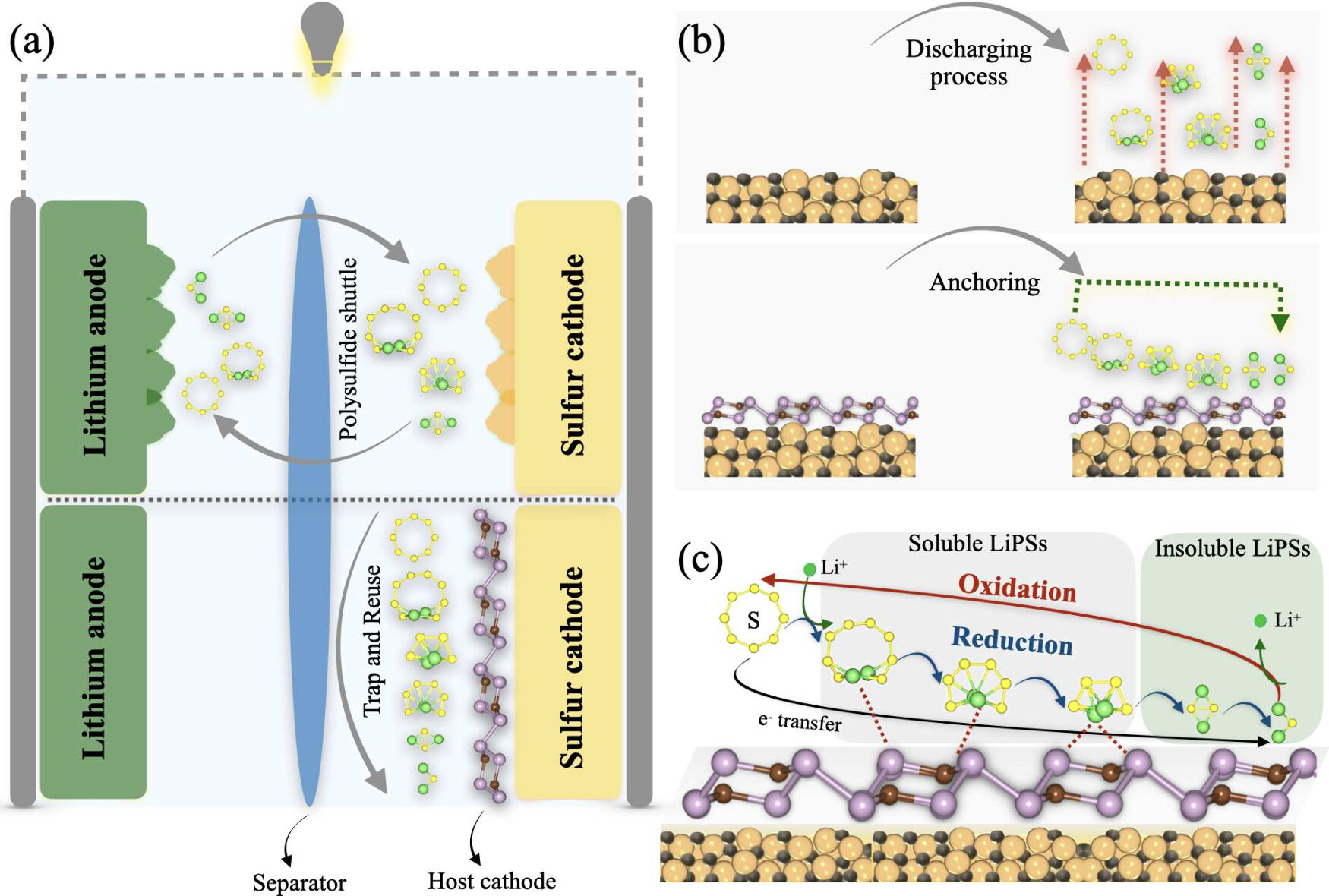
2D carbon phosphide structure derived from graphene and blue phosphorene showing polysulfide anchoring mechanisms
Lithium-sulfur (Li–S) batteries are promising for next-generation energy storage due to their high theoretical energy density (~2600 Wh kg⁻¹). We developed a novel sulfur host material that effectively suppresses the shuttle effect by anchoring lithium polysulfides through Li-P and S-P bonds, reducing dissolution into the electrolyte and enhancing sulfur reduction reaction kinetics.
🔋 ~2600 Wh kg⁻¹
🔄 Shuttle Effect Suppressed
⚡ Enhanced Kinetics
🔬 DFT + AIMD
01/25
Few-shot Learning for Screening 2D Ga₂CoS₄₋ₓ Supported Single-Atom Catalysts for Hydrogen Production
Journal of Energy Chemistry
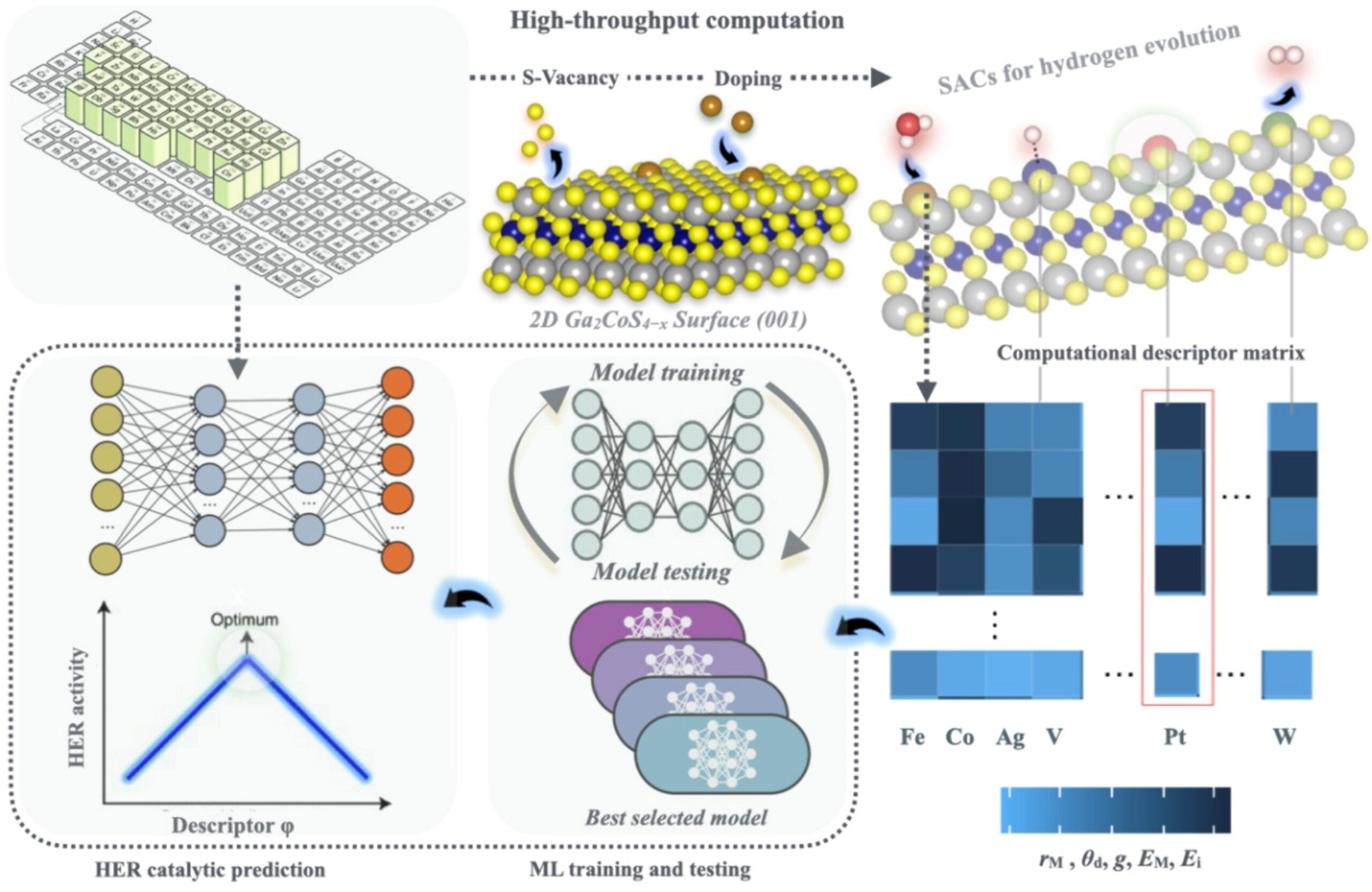
Few-shot machine learning framework for screening single-atom catalysts on 2D Ga₂CoS₄₋ₓ support
We combined high-throughput DFT screening with few-shot machine learning to predict the hydrogen evolution activity of catalysts supported on 2D Ga₂CoS₄-x. We identified promising alternatives to traditional platinum catalysts and developed an intrinsic descriptor that links atomic properties to catalytic performance.
🤖 Few-shot ML
🔍 High-throughput DFT
⚗️ Single-atom Catalysts
💎 Pt Alternatives
12/24
Theoretical Prediction of a High-Performance Two-Dimensional Type-II MoSi₂N₄/As vdW Heterostructure for Photovoltaic Solar Cells
Renewable Energy
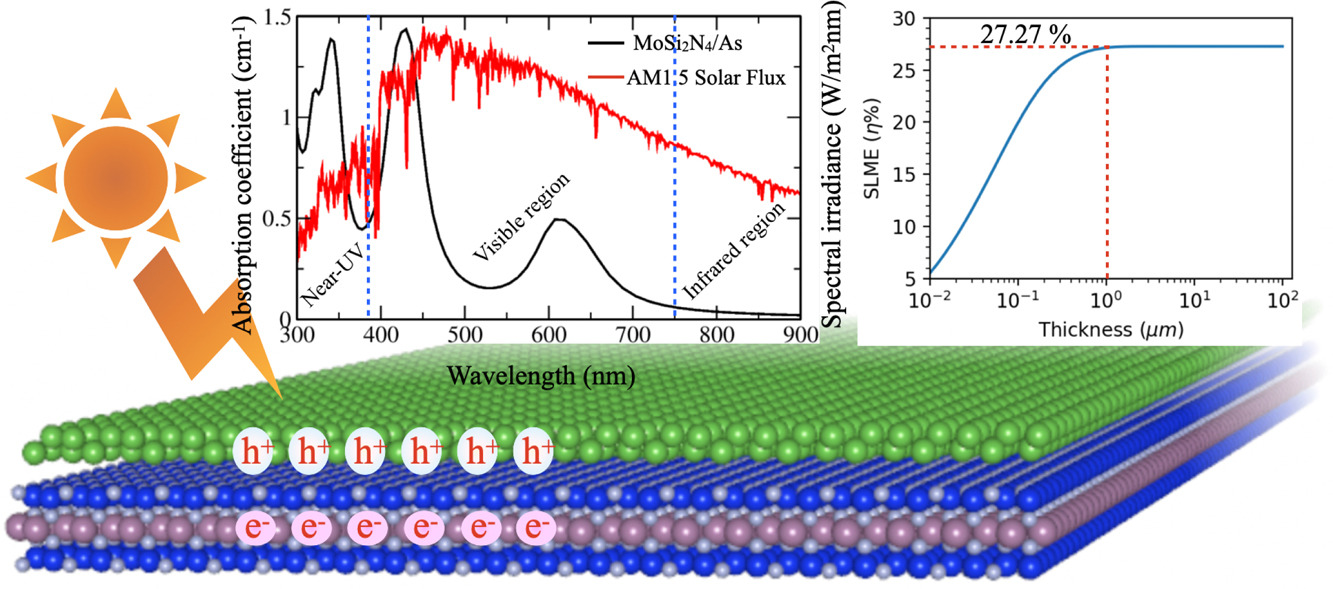
Type-II band alignment and optical properties of MoSi₂N₄/Arsenene van der Waals heterostructure
We report that a 2D MoSi₂N₄/Arsenene van der Waals heterostructure exhibits a type-II band alignment with an indirect band gap of 1.58 eV, achieving a spectroscopic limited maximum efficiency of 27.27%, marking a substantial improvement over conventional 2D monolayers.
🌞 27.27% Efficiency
📐 1.58 eV Bandgap
⚡ Type-II Alignment
🔬 vdW Heterostructure
03/24
PLANCKS 2024 International Physics Competition - Co-Organizer
🎓 Academic Leadership & Outreach
I had the privilege of co-organizing PLANCKS 2024, an annual international team competition in theoretical physics under the International Association of Physics Students (IAPS). Hosted the national PLANCKS competition in-person at Université Moulay Ismail in Morocco during the first week of March 2024. The winners earned the honor of representing Morocco in the international finals in Dublin, Ireland, from May 23rd to May 27th, 2024. I also presented lectures on computational materials and AI, focusing on scientific inquiry and competitive strategies.
02/24
2D Ge₂Se₂P₄ Monolayer: A Versatile Photocatalyst for Sustainable Water Splitting
The Journal of Physical Chemistry C

2D Ge₂Se₂P₄ monolayer structure and bifunctional photocatalytic performance for water splitting
The 2D Ge₂Se₂P₄ monolayer exhibits superior HER activity compared to most 2D materials and outperforms reference catalysts IrO₂(110) and Pt(111) in terms of low overpotential values for ORR and OER mechanisms, with very high solar-to-hydrogen efficiency.
💧 Bifunctional Catalyst
🌞 High Solar-to-H₂
⚡ Low Overpotential
🏆 Outperforms Pt
11/23
Unveiling the Catalytic Potential of Two-Dimensional Boron Nitride in Lithium-Sulfur Batteries
Chemical Engineering Journal
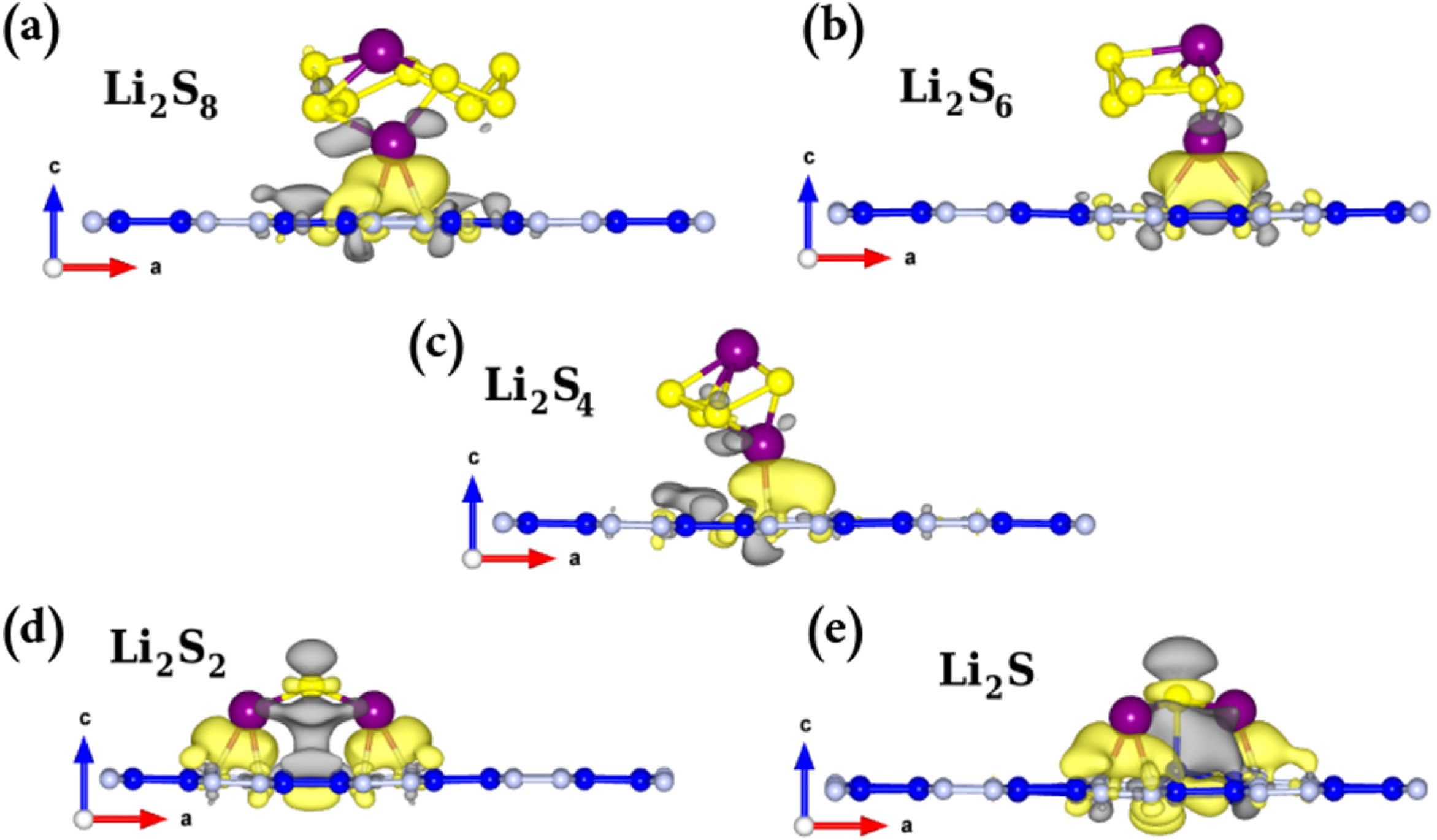
2D Boron Nitride as sulfur electrode supplement showing polysulfide attachment and ionic transport mechanisms
We explored the design and implementation of an improved 2D Boron Nitride material as a sulfur electrode supplement to reduce polysulfide incompatibilities and kinetic latency of the cathode in Li–S cells, leveraging 2D BN's strong polysulfide attachment capability.
🔋 Li-S Batteries
🔄 Polysulfide Control
⚡ Enhanced Kinetics
🧊 2D BN Material
10/23
Graphyne-based Membrane as a Promising Candidate for Li-Battery Electrodes Protection
Journal of Power Sources
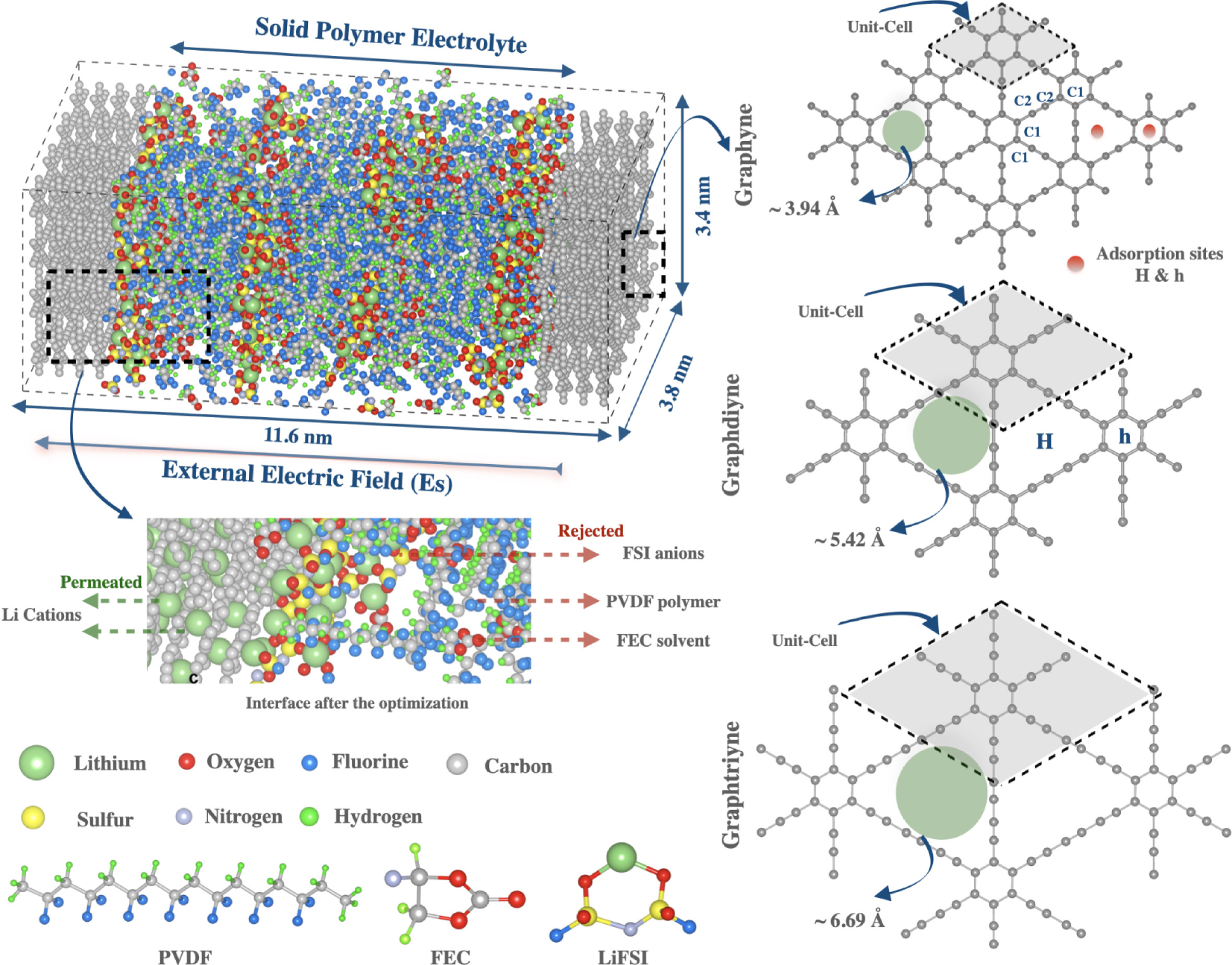
Graphyne-based membrane structures for protecting Li-battery electrodes against dendrite growth
Through first-principle calculations and molecular dynamics simulations, we examined the effectiveness of graphyne, graphdiyne, and graphtriyne in protecting battery electrodes in solid polymer electrolyte batteries, addressing dendrite growth challenges.
🛡️ Electrode Protection
🌳 Anti-Dendrite
🔬 MD Simulations
🔋 Solid-State
10/23
New Insights into Hydrogen Trapping and Embrittlement in High Strength Aluminum Alloys
Corrosion Science
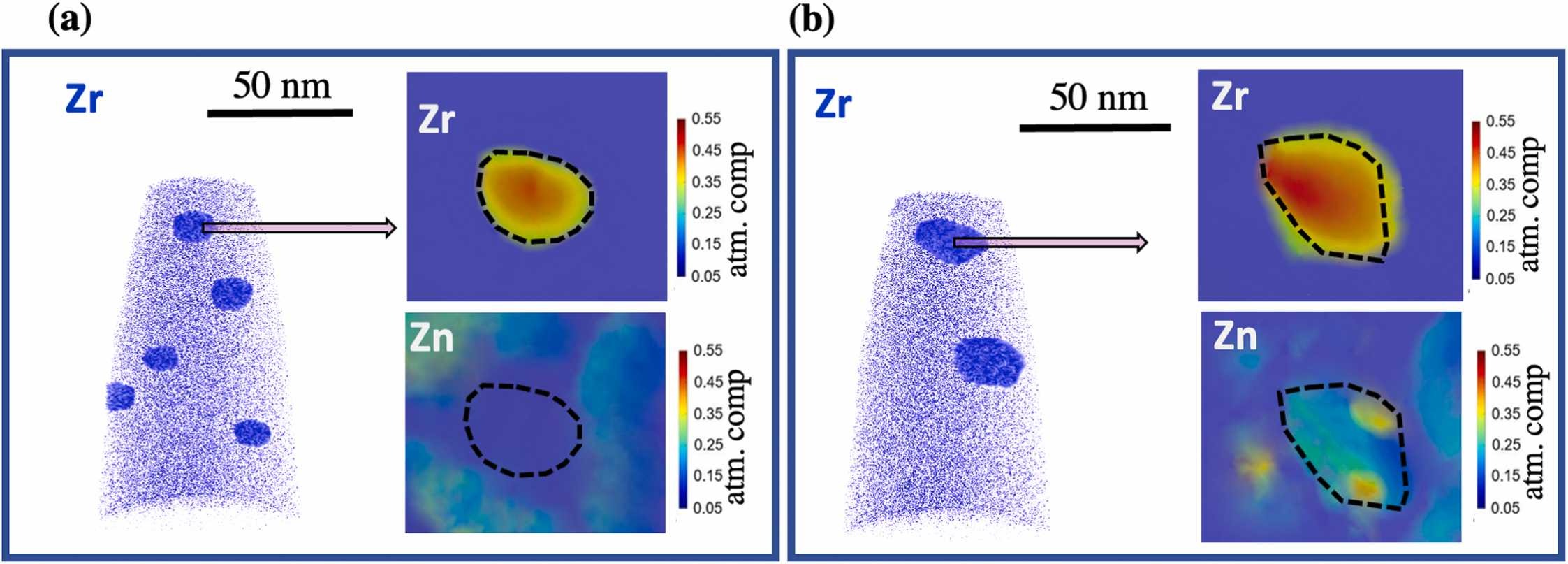
Microstructural effects on hydrogen embrittlement in high-strength aluminum alloys with Zr-containing nanoparticles
In collaboration with experimental researchers from Austria and Japan, we successfully unraveled the enigma surrounding hydrogen embrittlement in high-strength aluminum alloys. We explored the addition of Zr-containing nanoparticles and discovered that depending on their characteristics, some particles can mitigate HE, some provide hydrogen to vulnerable sites, and some act as crack initiation sites.
🔬 Experimental Collab
⚛️ Zr Nanoparticles
💪 Al Alloys
🇦🇹🇯🇵 International
06/22
Critical Overview on Organic Batteries: Advancement, Charge Storage Mechanisms, and Future Perspectives
Journal of Materials Chemistry A (RSC) - 🏆 FRONT COVER

Front cover publication showcasing organic battery electrodes and charge storage mechanisms for multivalent alkali ions
Our first front cover publication in the Royal Society of Chemistry (RSC), Journal of Materials Chemistry A (IF: 14.511), promoting our critical overview on the advancement of materials design along with the charge storage mechanisms of organic battery electrodes from monovalent to multivalent alkali ions.
🏆 Front Cover
🔋 Organic Batteries
📖 Critical Review
06/22
Revealing the Superlative Electrochemical Properties of o-B₂N₂ Monolayer in Lithium/Sodium-ion Batteries
Nano Energy
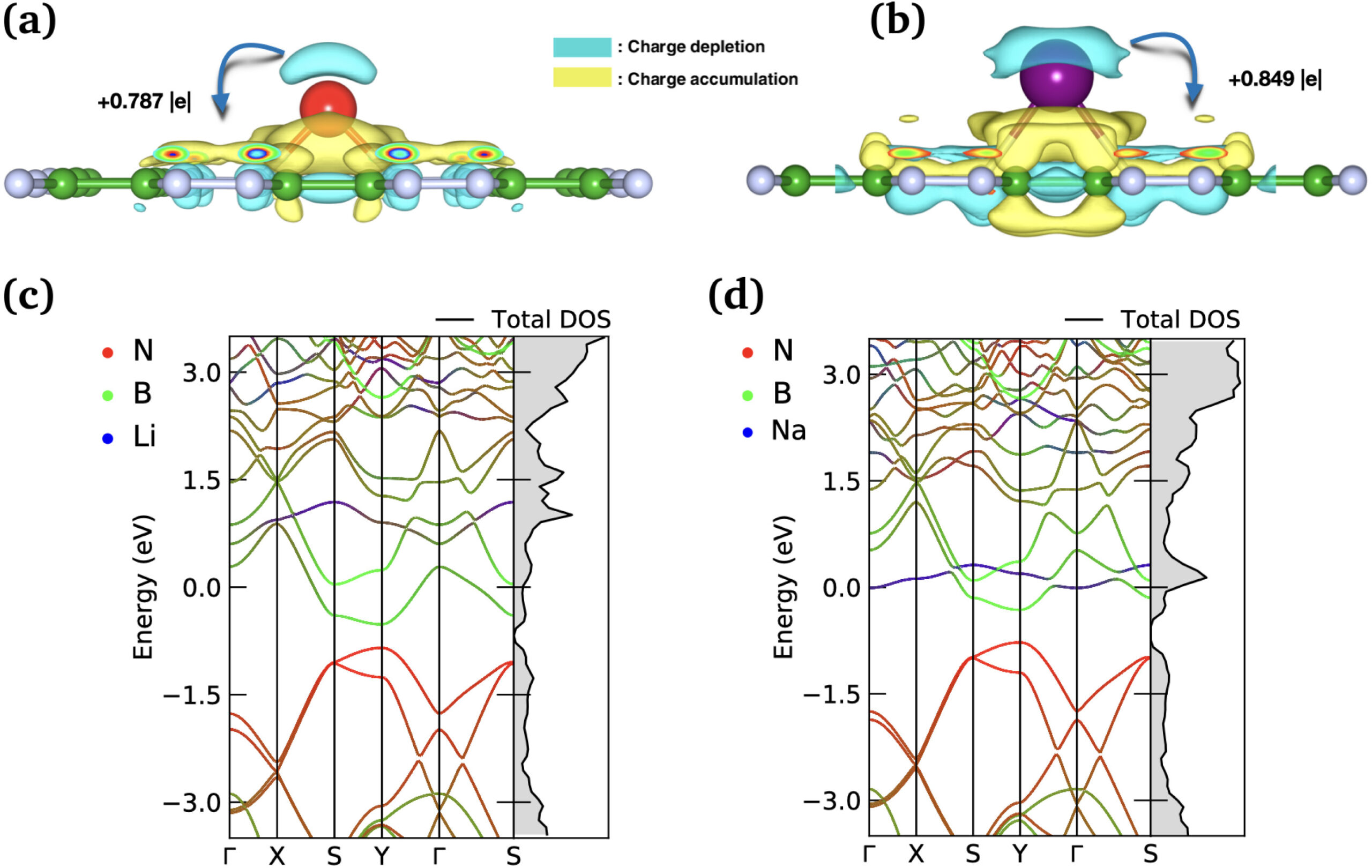
o-B₂N₂ monolayer structure and exceptional electrochemical performance showing 8.7x higher capacity than graphite
Using DFT, ab-initio molecular dynamics, and Basin-hopping Monte Carlo algorithm, we explored an alternative stable boron nitride structure with highly improved electrical conductivity, achieving theoretical capacity up to 8.7 times higher than commercialized graphite (3239.74 mAh/g vs 372 mAh/g).
🚀 8.7x vs Graphite
🔋 3239 mAh/g
⚡ Enhanced Conductivity
🔬 DFT + AIMD + BHMC
02/26
ASCICat: A Python Framework for Multi-Objective Electrocatalyst Screening
Open-Source Software Release + Preprint
07/25
Planar [Cu–S]–Organic Framework for Selective and Low-Overpotential CO₂ Reduction to Formate
Small Structures, Wiley
01/25
2D Carbon Phosphide for Trapping Sulfur in Rechargeable Li–S Batteries
ACS Applied Materials & Interfaces
01/25
Few-shot Learning for Screening 2D Ga₂CoS₄₋ₓ Supported Single-Atom Catalysts
Journal of Energy Chemistry
12/24
High-Performance 2D MoSi₂N₄/As vdW Heterostructure for Photovoltaic Solar Cells
Renewable Energy
02/24
2D Ge₂Se₂P₄ Monolayer: A Versatile Photocatalyst for Sustainable Water Splitting
The Journal of Physical Chemistry C
11/23
Unveiling the Catalytic Potential of 2D Boron Nitride in Li-S Batteries
Chemical Engineering Journal
10/23
Graphyne-based Membrane for Li-Battery Electrodes Protection
Journal of Power Sources
10/23
Hydrogen Trapping and Embrittlement in High Strength Aluminum Alloys
Corrosion Science
10/23
Fe/Co-Doping and Electric Field in Niobium Diboride for H₂ Production
Surfaces and Interfaces
06/22
Critical Overview on Organic Batteries - 🏆 FRONT COVER
Journal of Materials Chemistry A (RSC)
06/22
o-B₂N₂ Monolayer in Lithium/Sodium-ion Batteries
Nano Energy
02/26
ASCICat Open-Source Release — Multi-Objective Catalyst Screening Framework
🚀 Software Release
Released ASCICat, an open-source Python framework for deterministic multi-objective electrocatalyst screening. Combines activity, stability, and cost into a unified ASCI score. Validated on HER and CO₂RR datasets. Available via
pip install ascicat with Python API, CLI, and GUI interfaces.
03/24
PLANCKS 2024 International Physics Competition - Co-Organizer
🎓 Academic Leadership & Outreach
Co-organized PLANCKS 2024 international physics competition under IAPS. Hosted national competition at Université Moulay Ismail in Morocco. Winners represented Morocco in Dublin finals. Delivered lectures on computational materials and AI.
09/23
New Journey at TU Delft - Machine Learning for Materials Science
🇳🇱 Career Advancement
Started as Postdoctoral Researcher at Technische Universiteit Delft, specializing in machine learning for materials science. Joining TU Delft's community to push frontiers of AI and materials research.
06/22
First Front Cover Publication Achievement
🏆 Research Milestone
Achieved first front cover publication in RSC Journal of Materials Chemistry A (IF: 14.511) on organic battery electrodes and charge storage mechanisms for multivalent alkali ions.
×
![]()